Who in the company should be able to change a process
A change to the system can be made by the vendor or by your own company. Both models compared across four dimensions, plus a list of what an analyst reconfigures in Opero without a developer.
Tag
Wpisy o platformie Opero — architekturze, modułach i rozwoju produktu.
A change to the system can be made by the vendor or by your own company. Both models compared across four dimensions, plus a list of what an analyst reconfigures in Opero without a developer.
One complaint from Monday to Friday, and half a year later. Where the agreements land in Opero: a comment on the record, a mention with a notification, a reaction, and a comment required on a process transition.
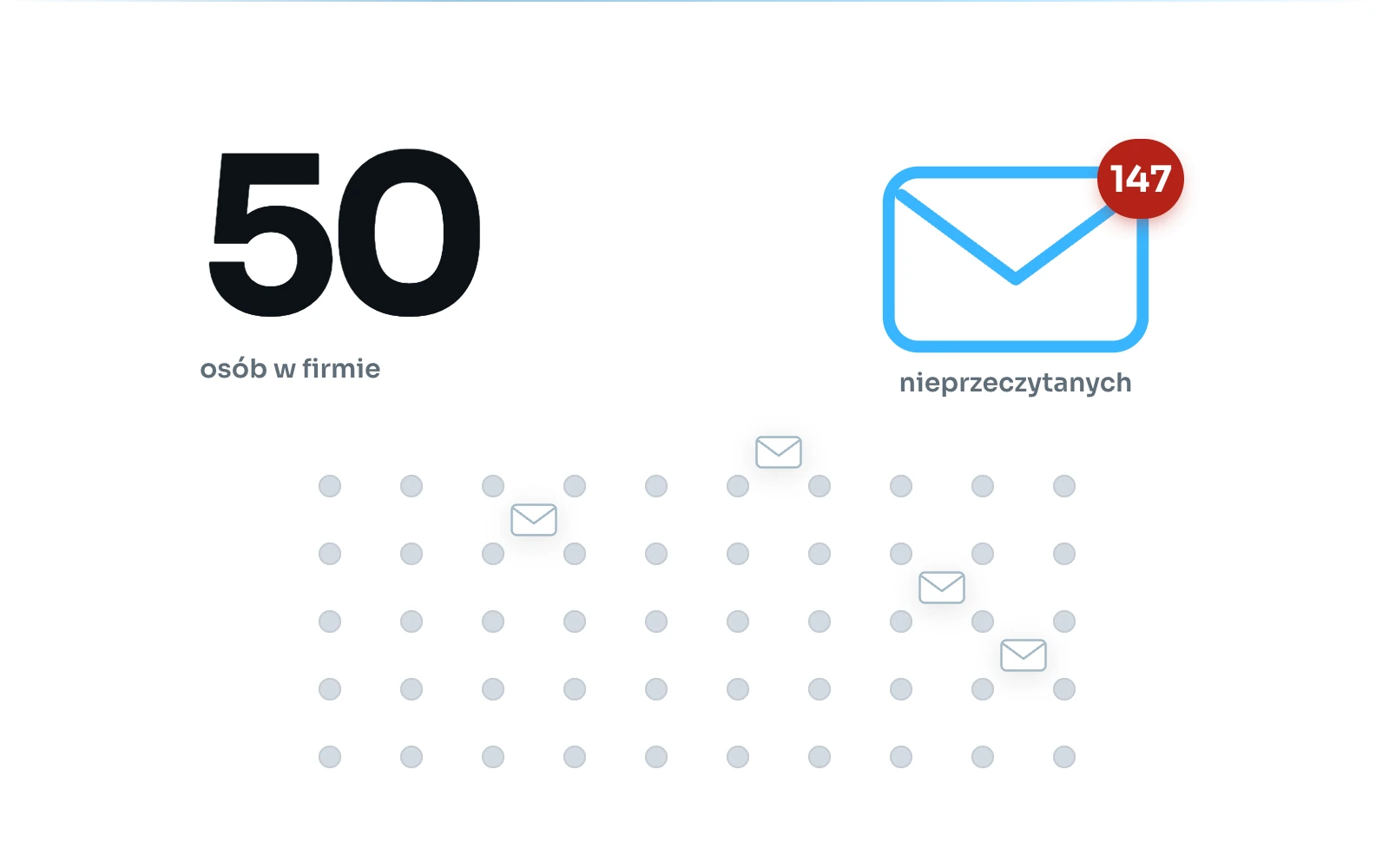
E-mail approvals do not fail all at once. They fail at twenty, thirty and fifty people, in a different place each time. Follow the same company and the same purchase order through three moments of growth, and see what a process in Opero makes of each one.
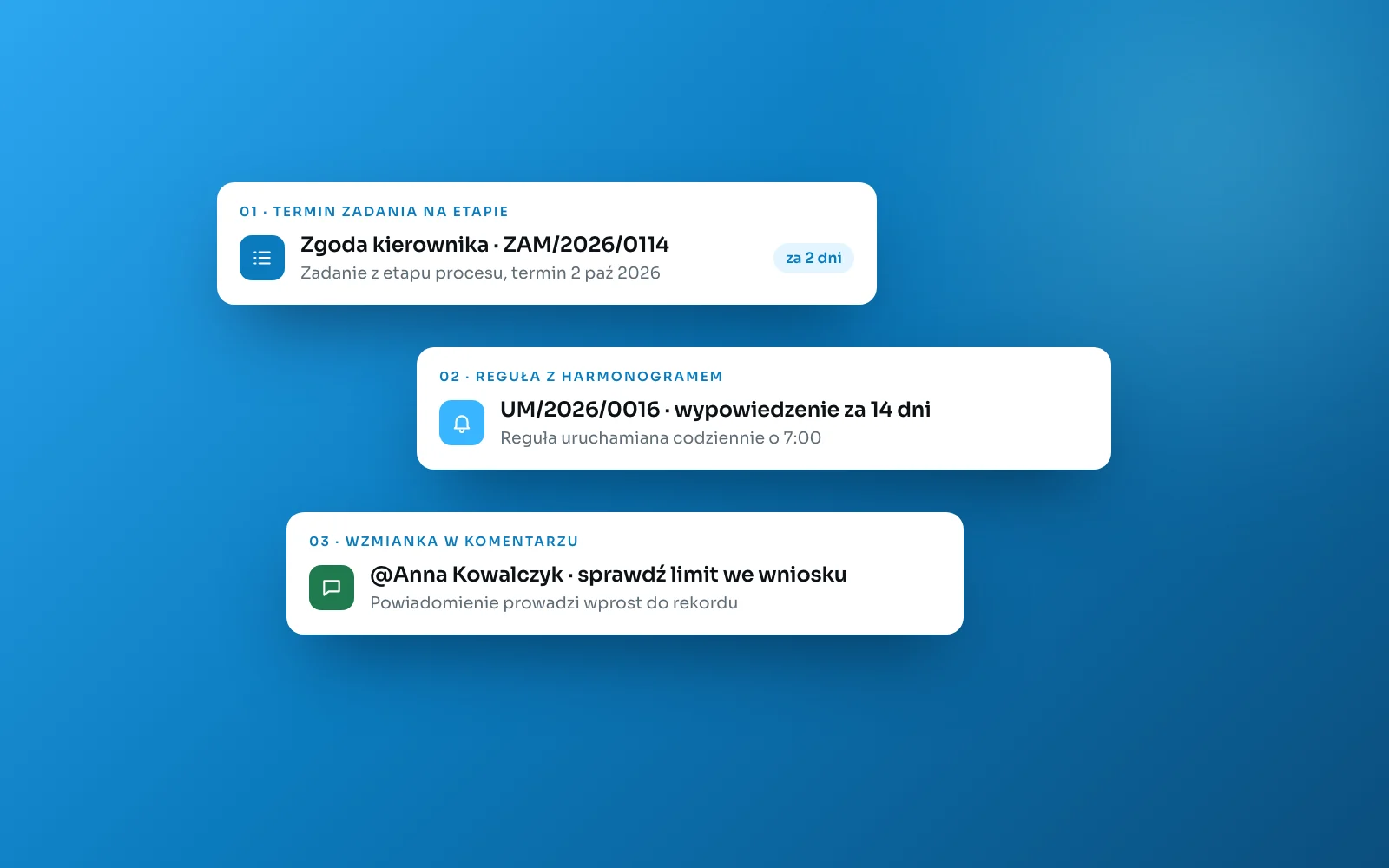
A date in a field notifies nobody. Opero sends three kinds of signal: a task due date on a process stage, a scheduled rule and a mention notification. Each one is triggered by something different.
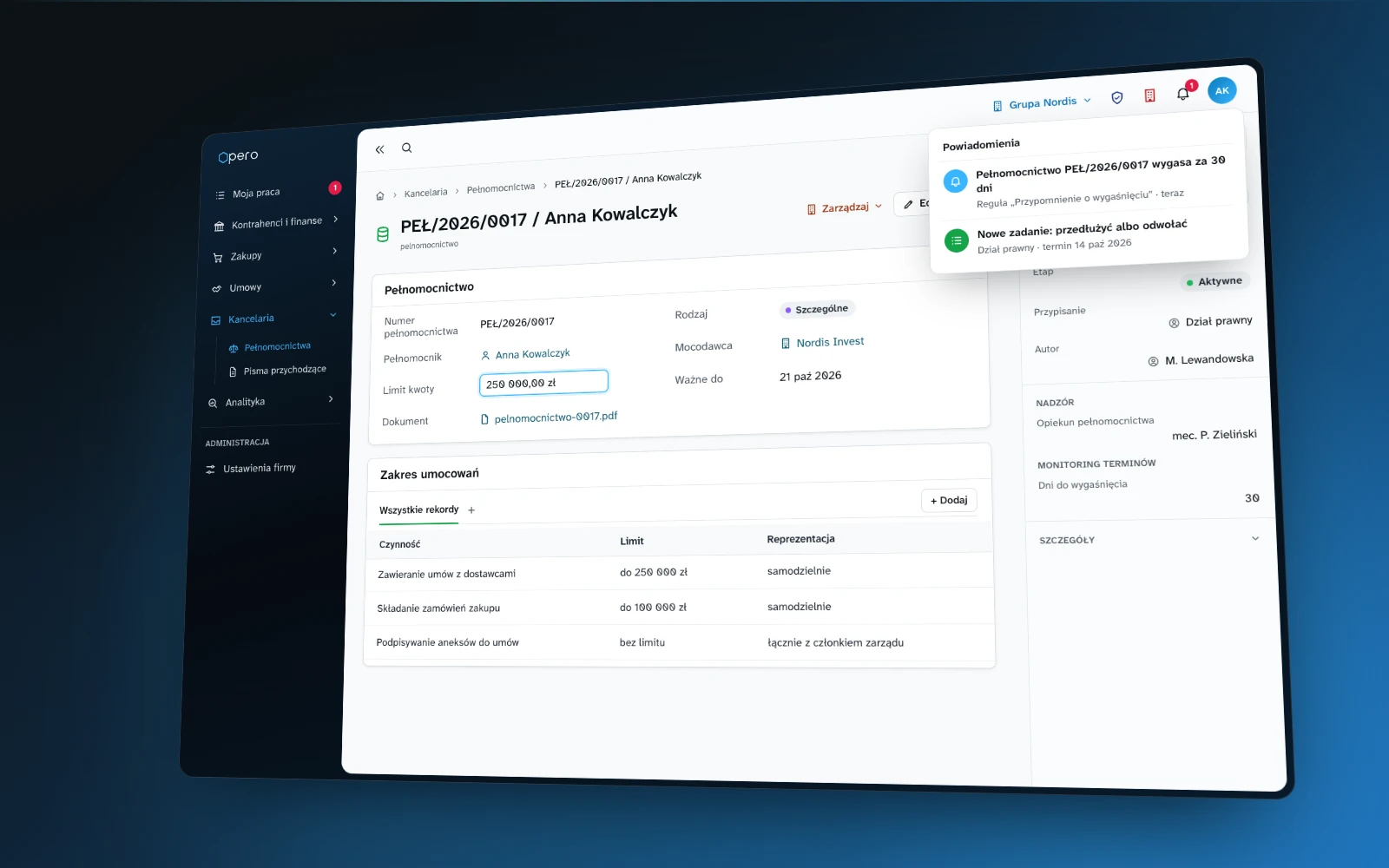
A register of powers of attorney in a group of companies fits no off-the-shelf system. We walk through it step by step: custom object, fields, subordinate object, form, layout, navigation, process and report.
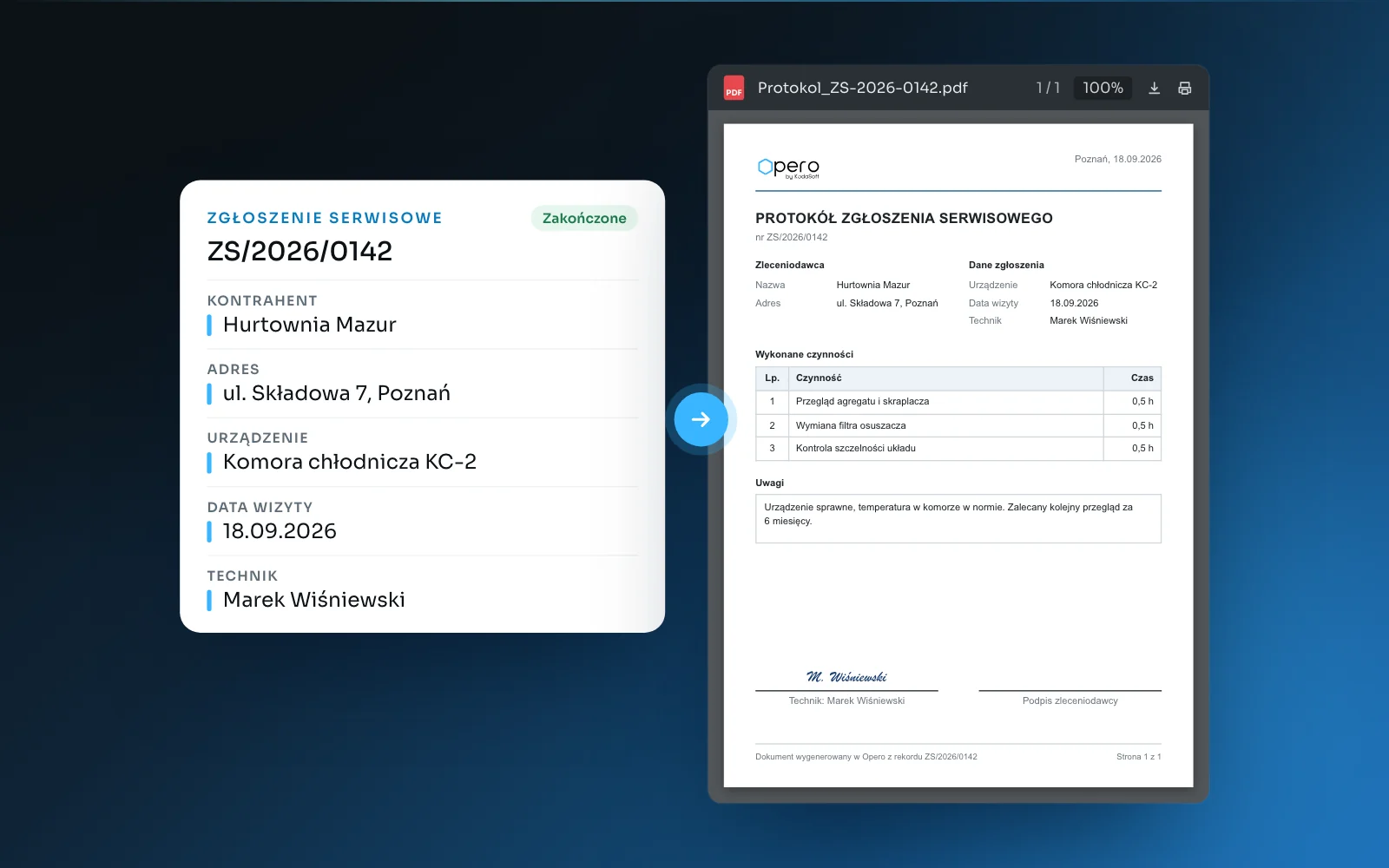
Most errors in company documents come from copying the previous file. How document templates work in Opero: variables, shared parts, versions and documents generated by rules.
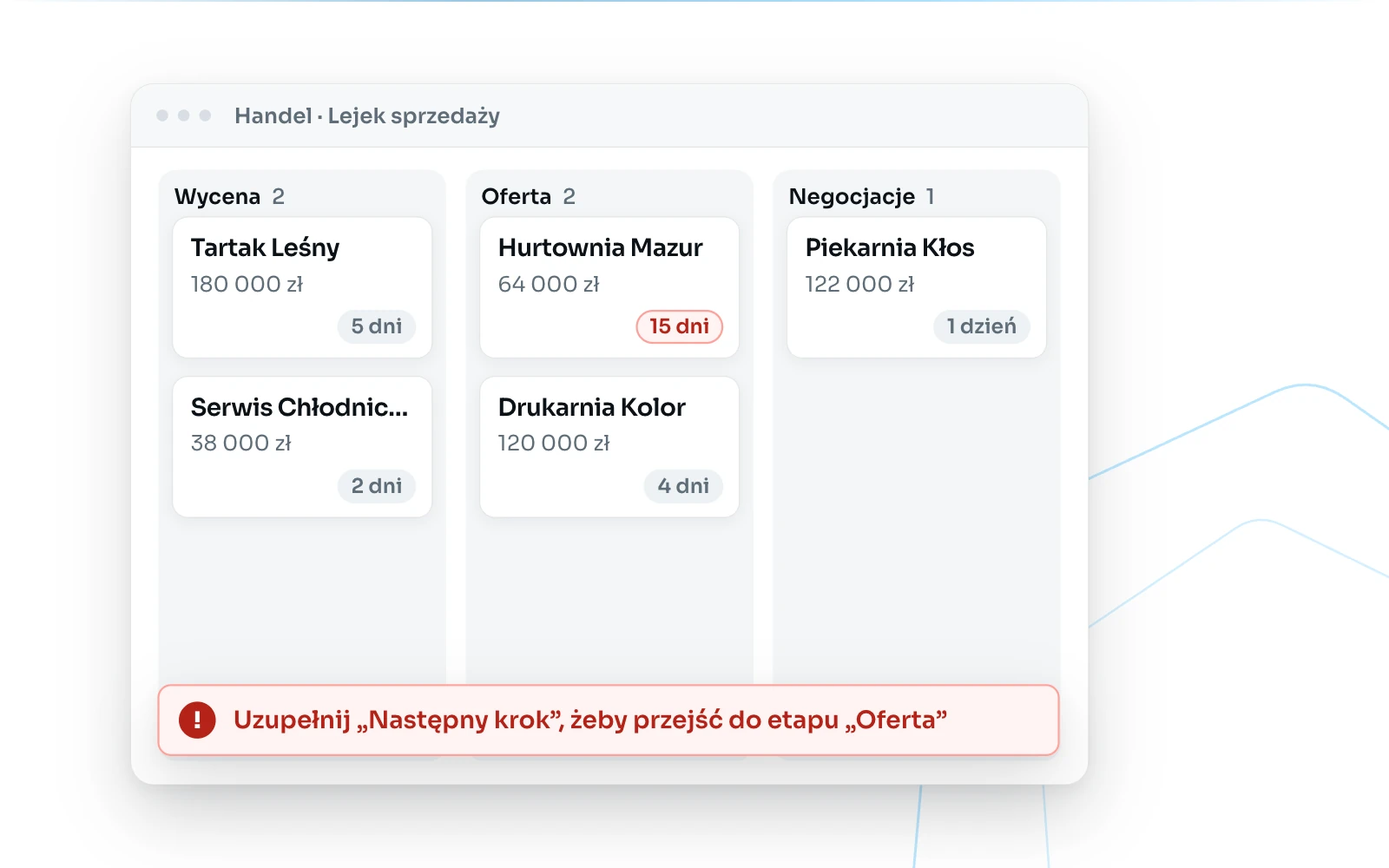
A deal stage in a CRM tells you where the sale is, but not how long it has been sitting there. How a pipeline built on a process in Opero enforces the next step, time in stage and the path from deal to offer.
A stage stored as a field value can be changed by anyone with access to the record. How Opero enforces order, permissions and deadlines, shown on a cost invoice workflow.
A salesperson, an accountant and a field technician open the same record - and each needs a different screen. On role-based forms and why a form for everyone is a form for no one.
We are starting a blog. Expect ERP implementations, Poland's compliance digitisation, and a look inside how the Opero platform gets built.
Next step
We can walk through your operations, show how Opero would model them, and be direct about what fits and what does not.