Who in the company should be able to change a process
A change to the system can be made by the vendor or by your own company. Both models compared across four dimensions, plus a list of what an analyst reconfigures in Opero without a developer.
One complaint from Monday to Friday, and half a year later. Where the agreements land in Opero: a comment on the record, a mention with a notification, a reaction, and a comment required on a process transition.
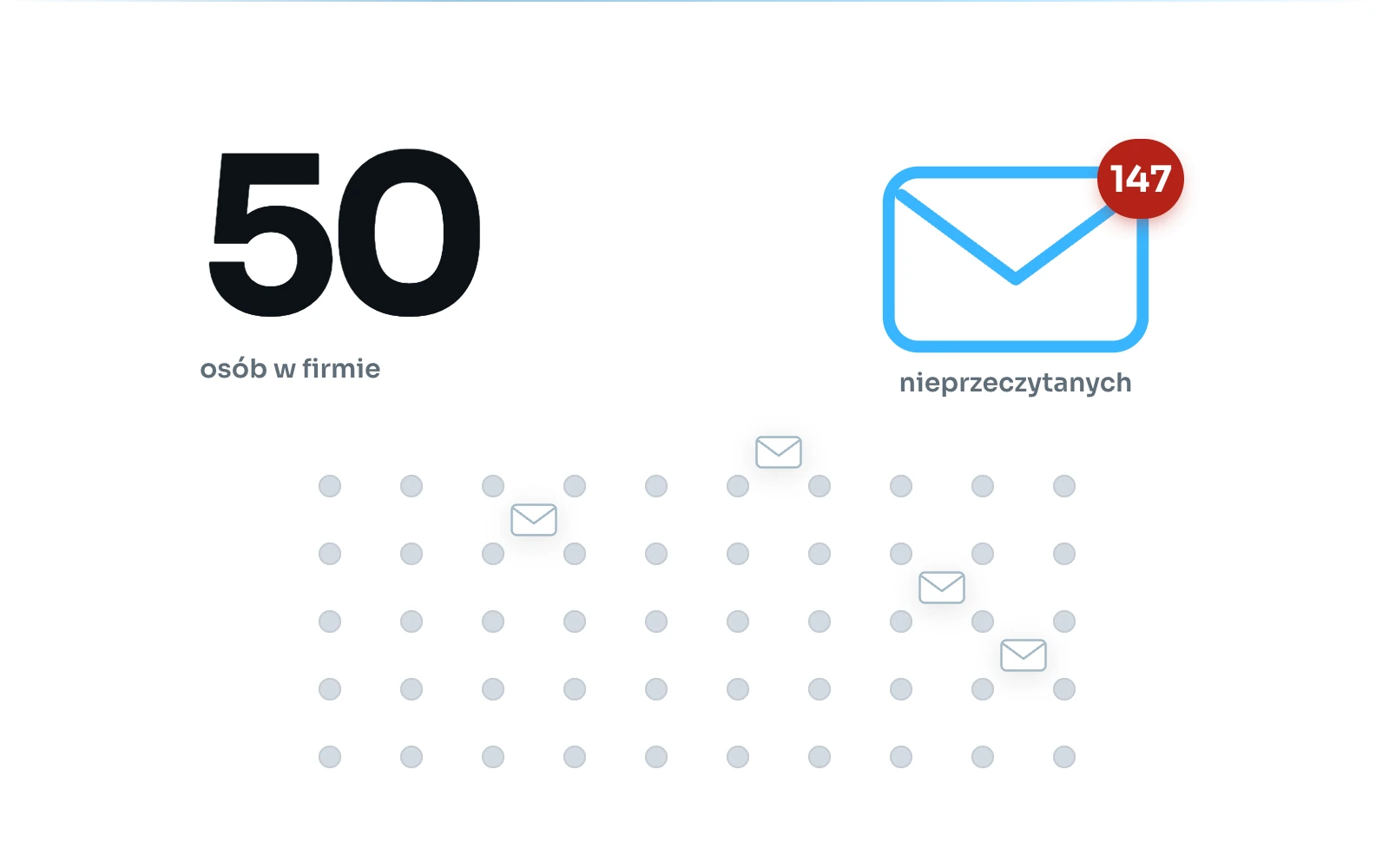
E-mail approvals do not fail all at once. They fail at twenty, thirty and fifty people, in a different place each time. Follow the same company and the same purchase order through three moments of growth, and see what a process in Opero makes of each one.
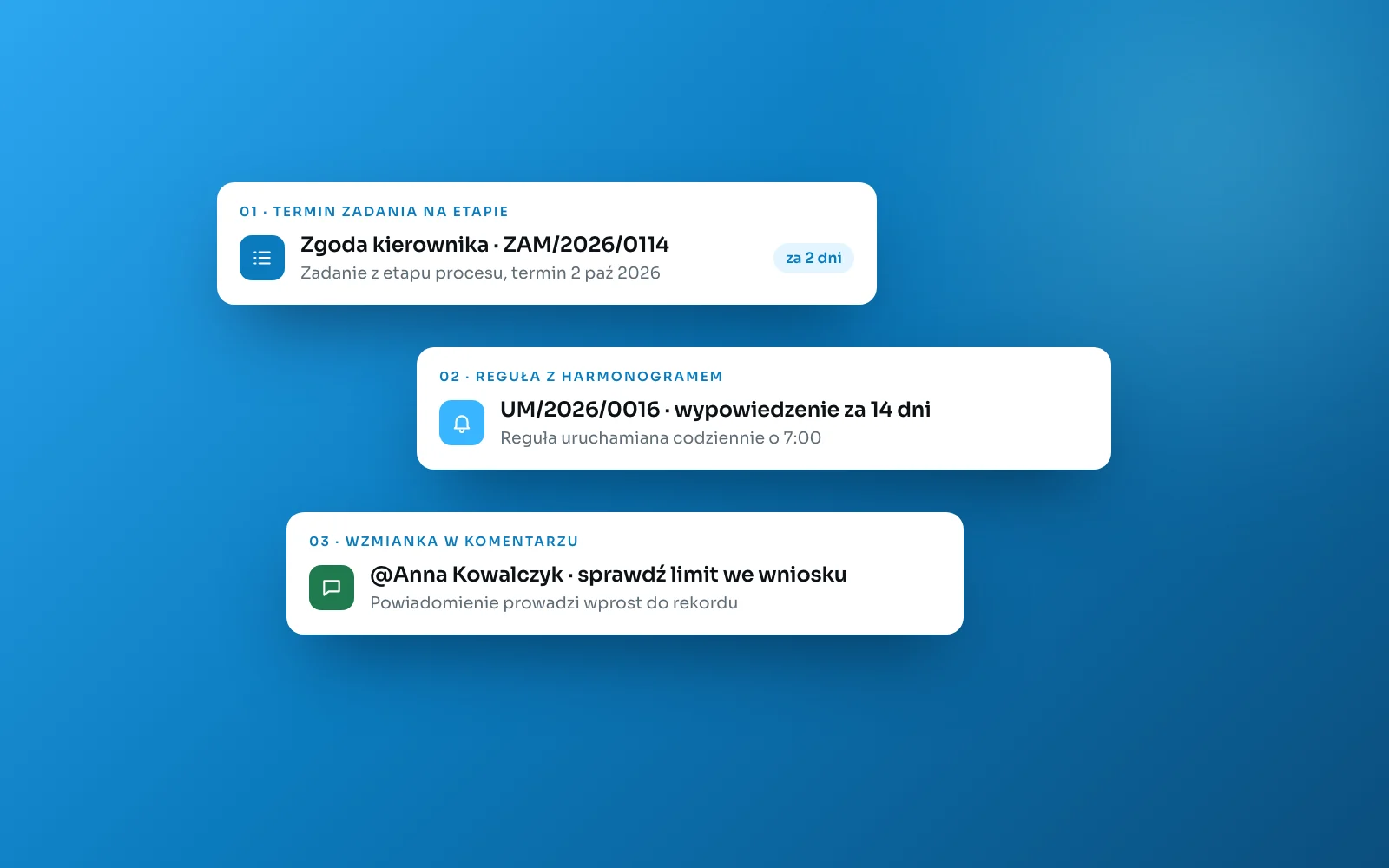
A date in a field notifies nobody. Opero sends three kinds of signal: a task due date on a process stage, a scheduled rule and a mention notification. Each one is triggered by something different.
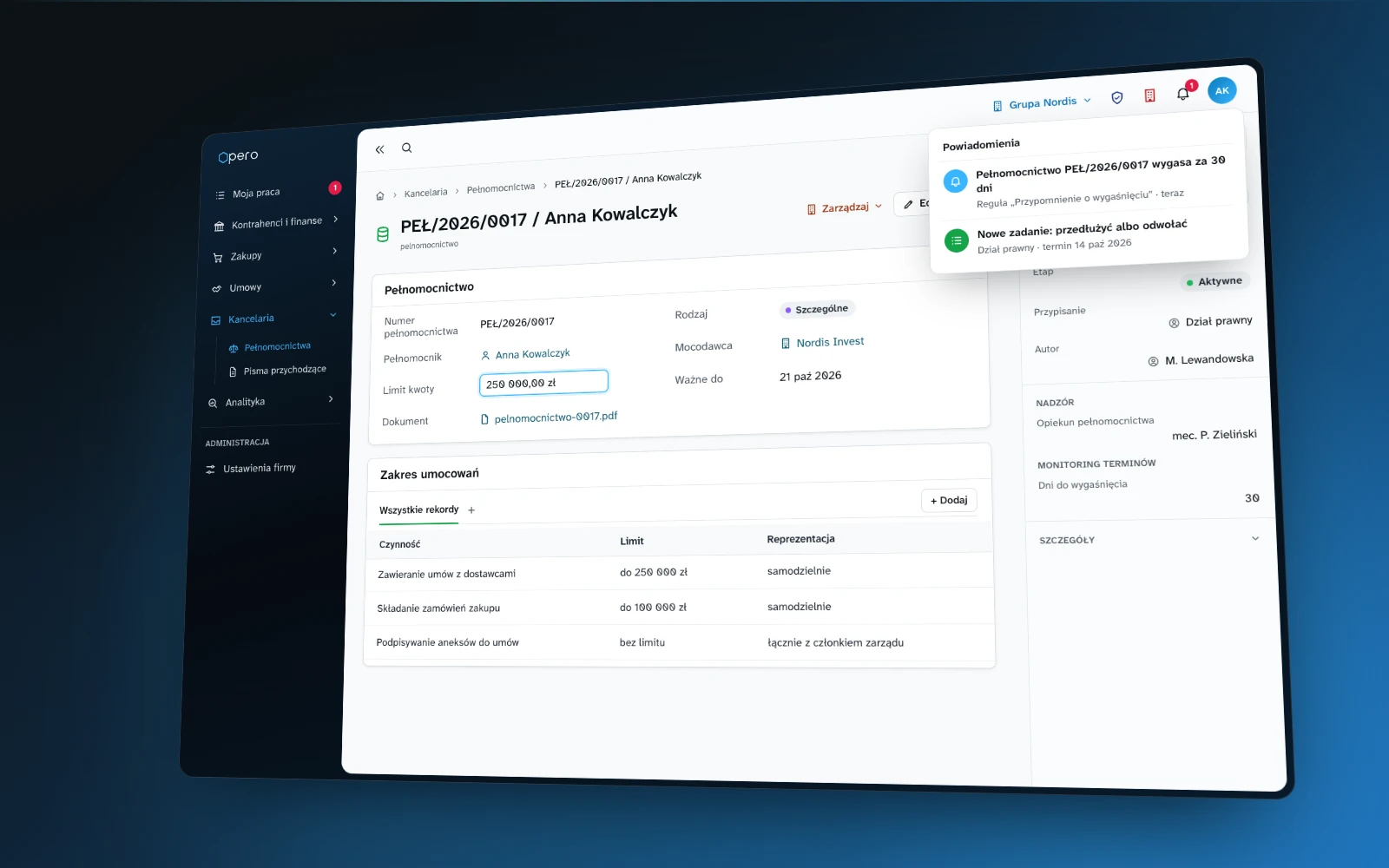
A register of powers of attorney in a group of companies fits no off-the-shelf system. We walk through it step by step: custom object, fields, subordinate object, form, layout, navigation, process and report.
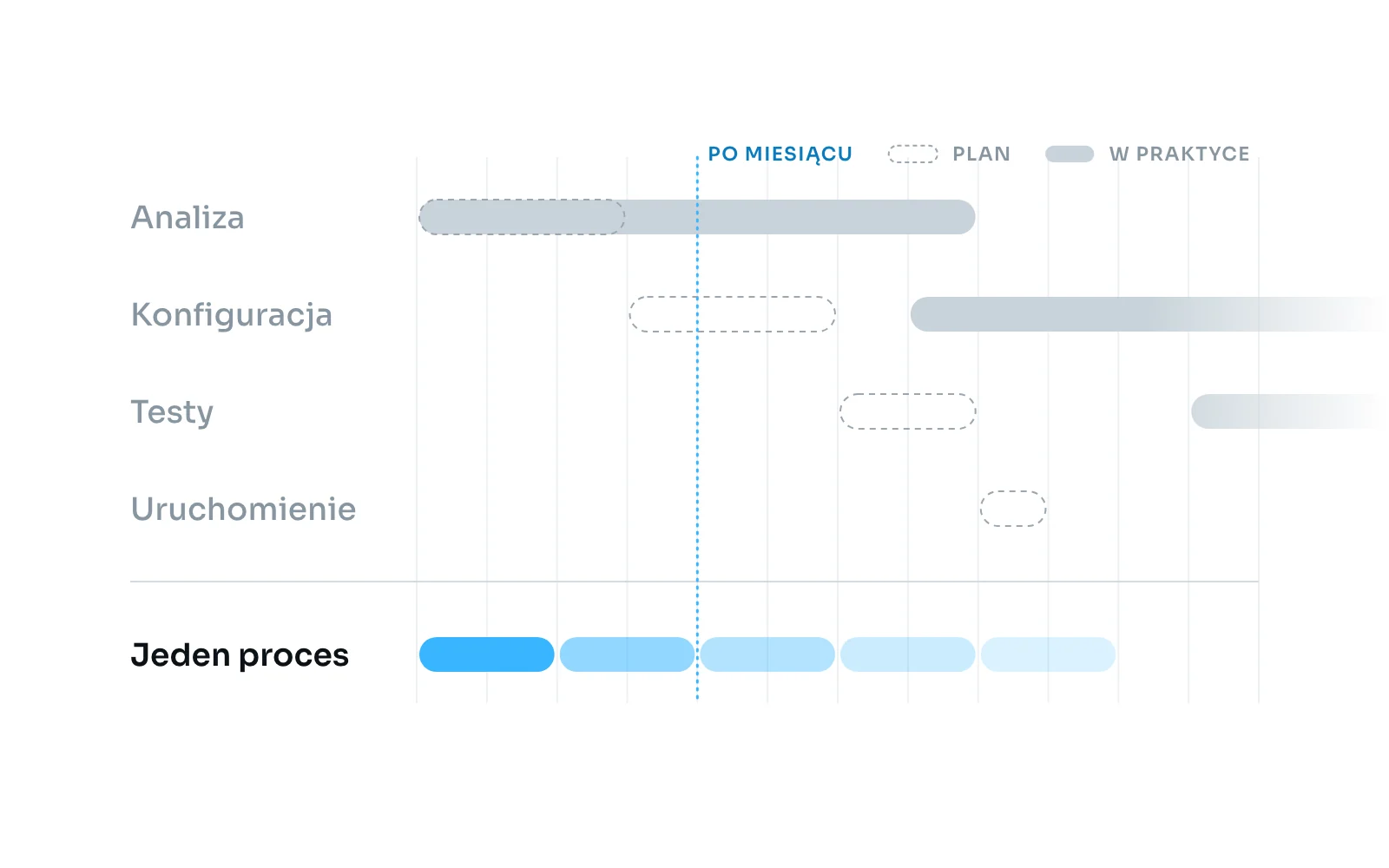
Implementations rarely fall over on technology. They fall over because the company spends six months designing the target state on paper instead of running one process and testing it in practice.
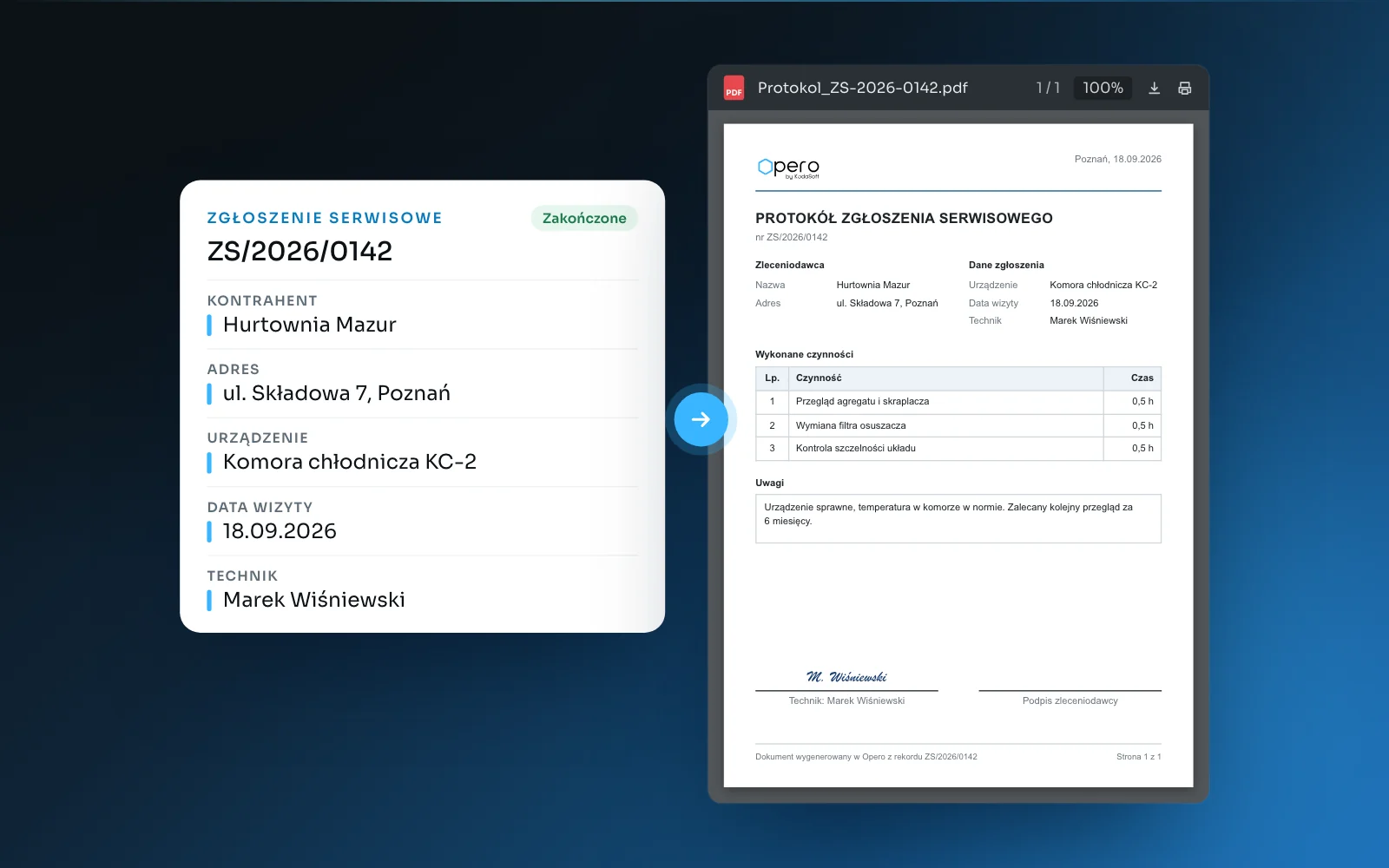
Most errors in company documents come from copying the previous file. How document templates work in Opero: variables, shared parts, versions and documents generated by rules.
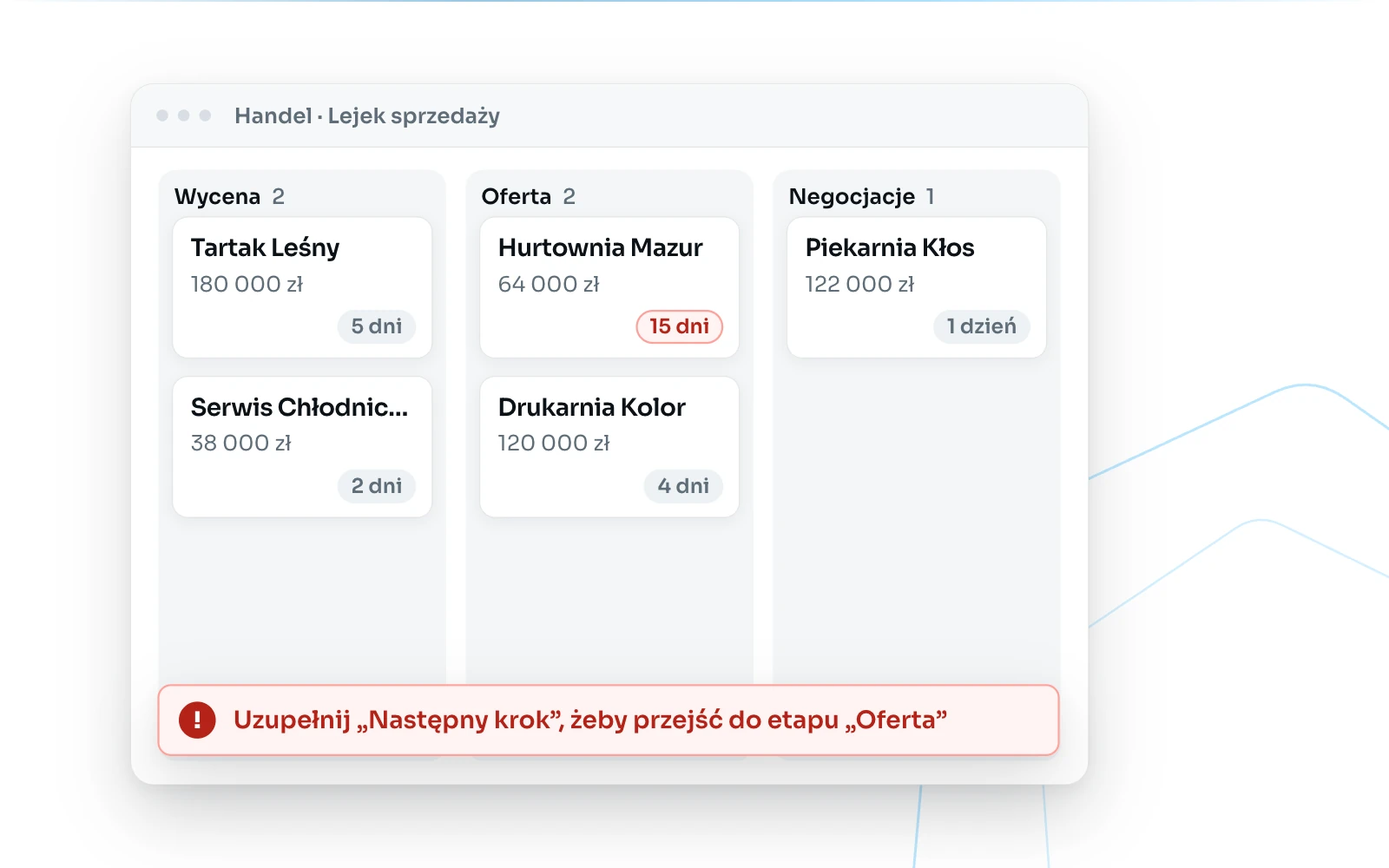
A deal stage in a CRM tells you where the sale is, but not how long it has been sitting there. How a pipeline built on a process in Opero enforces the next step, time in stage and the path from deal to offer.
A stage stored as a field value can be changed by anyone with access to the record. How Opero enforces order, permissions and deadlines, shown on a cost invoice workflow.
Both options carry a real price and both are sometimes right. The honest case for and against each, three questions that settle it, and a middle road nobody talks about.
A ten-minute test: take a case from a year ago and try to answer five questions. The four layers that have to be recorded, the difference between a file archive and a case history, and what no tool will ever fix.
From 1 October 2026 an electronic delivery address becomes mandatory for businesses registered in Poland's CEIDG before 2025. Who the deadline covers, how to check whether you already have an address, and what to settle inside the company the same day.
Automation in business systems often has a low barrier to entry. Maintaining it is another matter entirely. A few words on three patterns we met on implementations, and the design decisions that came out of them in Opero.
Most companies have a written approval procedure nobody follows. Five roles around a single invoice, three typical blockages, and an approval matrix that does not carry forty exceptions.
A spreadsheet is not a bad tool. It is an invisible one, as far as the rest of the company is concerned. Seven signs it has turned from a tool into a risk, and one first step that is not a major implementation.
KSeF issues invoices, delivers them and stores them. It does not describe the cost, collect approvals or watch payment dates. Here is what stays on your side, and how to put it in order before the penalty-free period ends with 2026.
A salesperson, an accountant and a field technician open the same record - and each needs a different screen. On role-based forms and why a form for everyone is a form for no one.
Excel, emails and a queue to IT? Learn what a low-code system is, the problems it really solves, when it pays off and how to adopt it without risk.
We are starting a blog. Expect ERP implementations, Poland's compliance digitisation, and a look inside how the Opero platform gets built.
Next step
We can walk through your operations, show how Opero would model them, and be direct about what fits and what does not.